Pierrefitte (79330), Deux-Sèvres
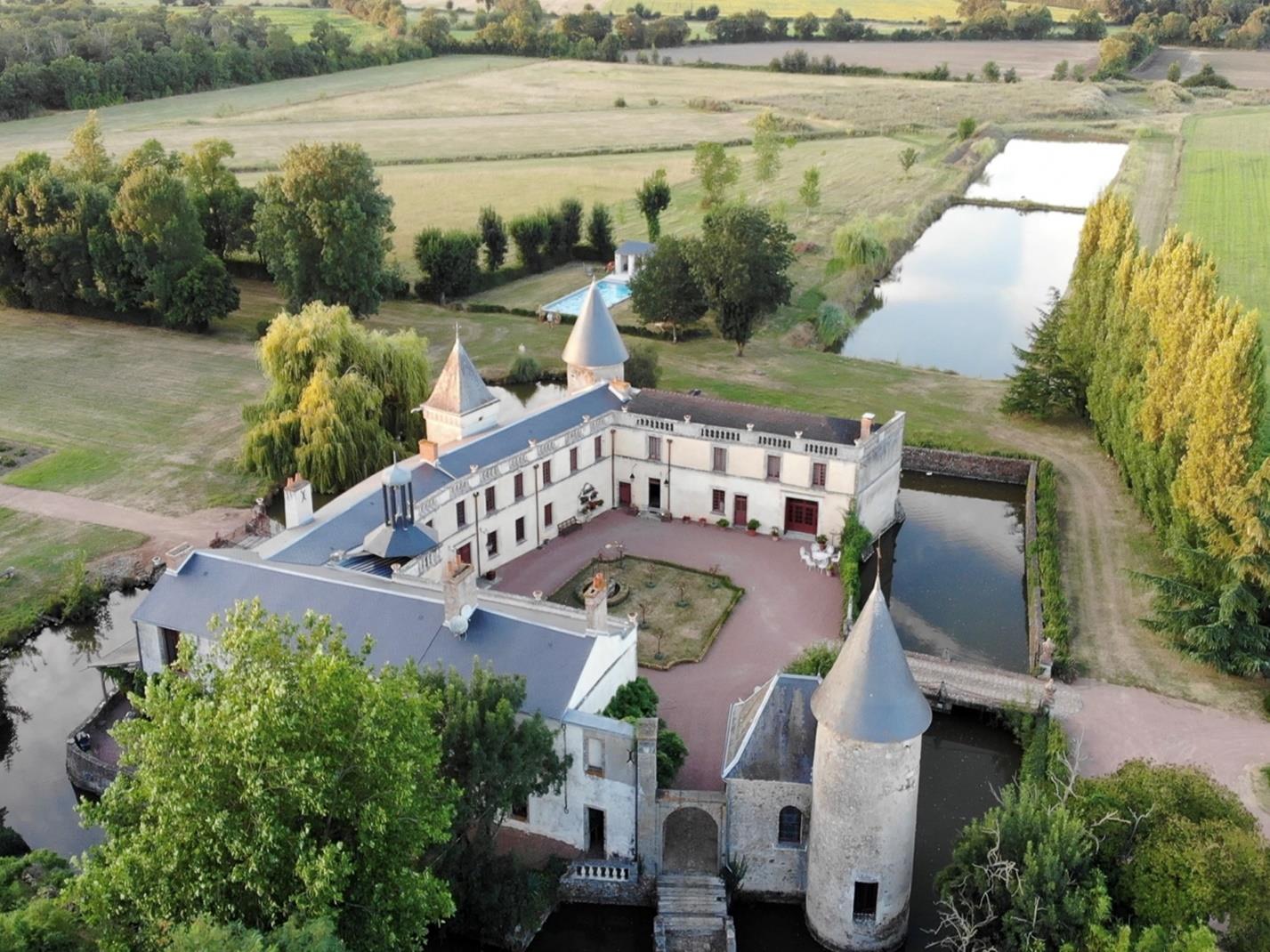
Château de Bournizeaux
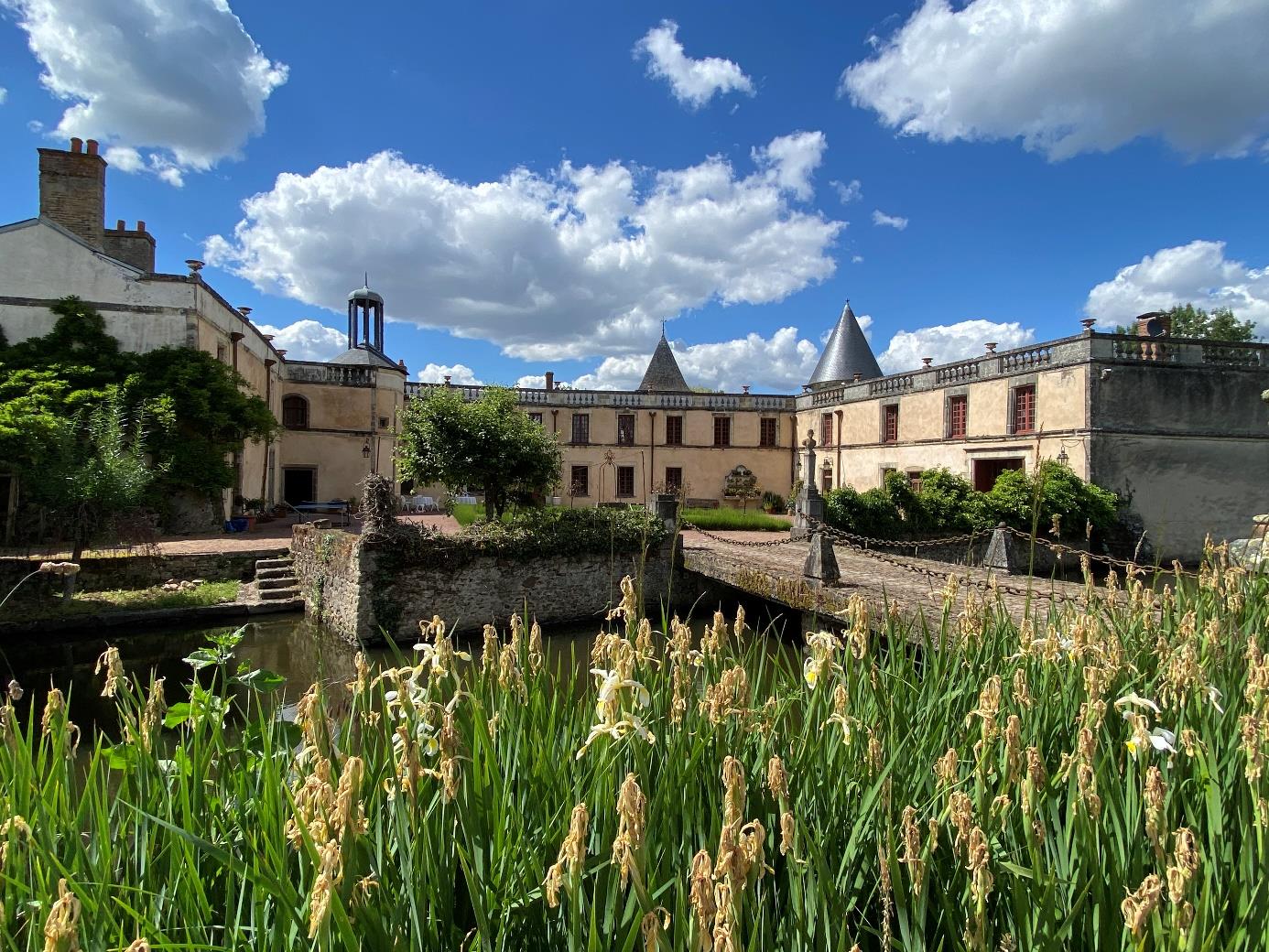
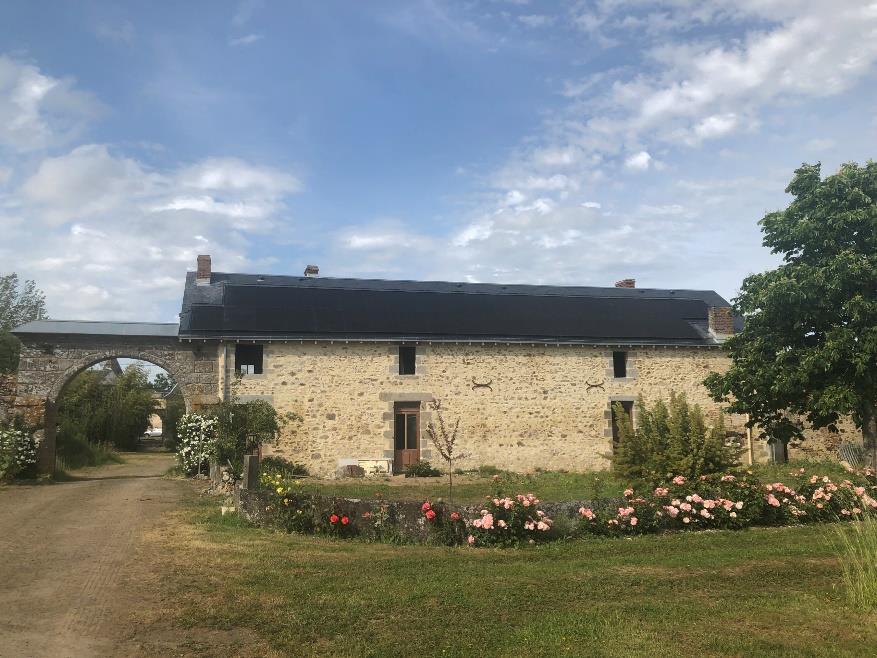
Fortified site from 1151; current château and Sainte-Marguerite chapel built 1735. Moated, largely restored, with a separate gîte, a consecrated chapel, 500 m² of outbuildings to convert and a working private airfield on 54 hectares.
Asking today, net to the vendor
€2,100,000
All-in with the 3% agency fee
€2,163,000
Down from €2,520,000 in the 2024 brochure, and €42,000 below the €2,205,000 that the old 5% commission implied — same money to the vendor.
953 m² habitable
753 m² château + 200 m² gîte
53.89 hectares
Parkland, meadows, 25 ha forest
3 licensed runways
480 / 650 / 1,120 m + hangar
Moated, 1735
Chapel, pool, 500 m² outbuildings
The short answer — revised August 2026
Buy it — around €1.9M–€1.98M, and only with the airfield as a condition, not as a price.
Your latest answers strengthen the case. The furniture, tractors and hangar equipment stay, which is €120k–€200k of year-one capex you avoid. The gîte operating company transfers with its websites, reviews and customer base, so you inherit a trading business rather than a cold start. The chapel and the 500 m² of outbuildings can wait indefinitely, so the big restoration bill becomes optional capex instead of a day-one liability. The 53.89 ha carry no bail rural and no third-party hunting rights, so the land is genuinely private. Nothing is classé, so you can glaze, convert and re-heat on your own terms and at market prices.
The seller's August 2026 email moves two more things your way: the commission will be 3% rather than 5% — €2,163,000 all-in for the same money to the vendor — and the aerodrome chart names the operator as "Château de Bournizeaux", the estate itself, which is the best sign yet that the airfield follows the walls. Three things still pull the other way: the aerodrome authorisation is not yet confirmed transferable in writing, so keep valuing it at zero behind a condition suspensive; there is no insurance whatever on the runways, and the "at your own risk" notice will not save you from a passenger or third-party claim; and the neighbouring farmer's mow-and-keep-the-hay arrangement must be re-papered or ended before completion, or it can harden into a bail rural verbal. Add the company's inherited liabilities, two years on the market and a €315k cut already conceded, and fair value stays €1.85M–€2.05M: open at €1.82M net of fees, target €1.9M–€1.975M, walk away above €2.08M.
The estate, asset by asset
What exactly is included
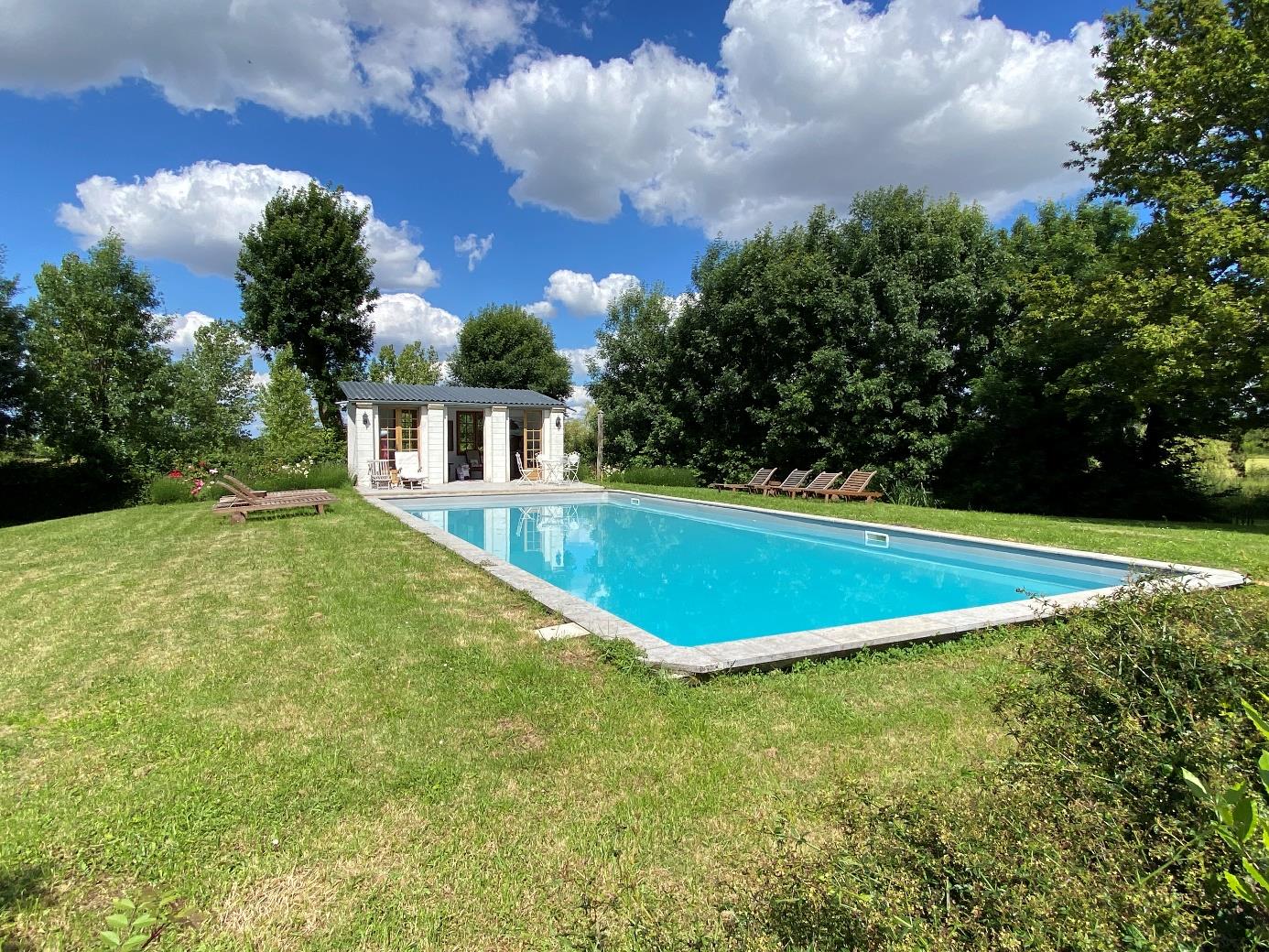
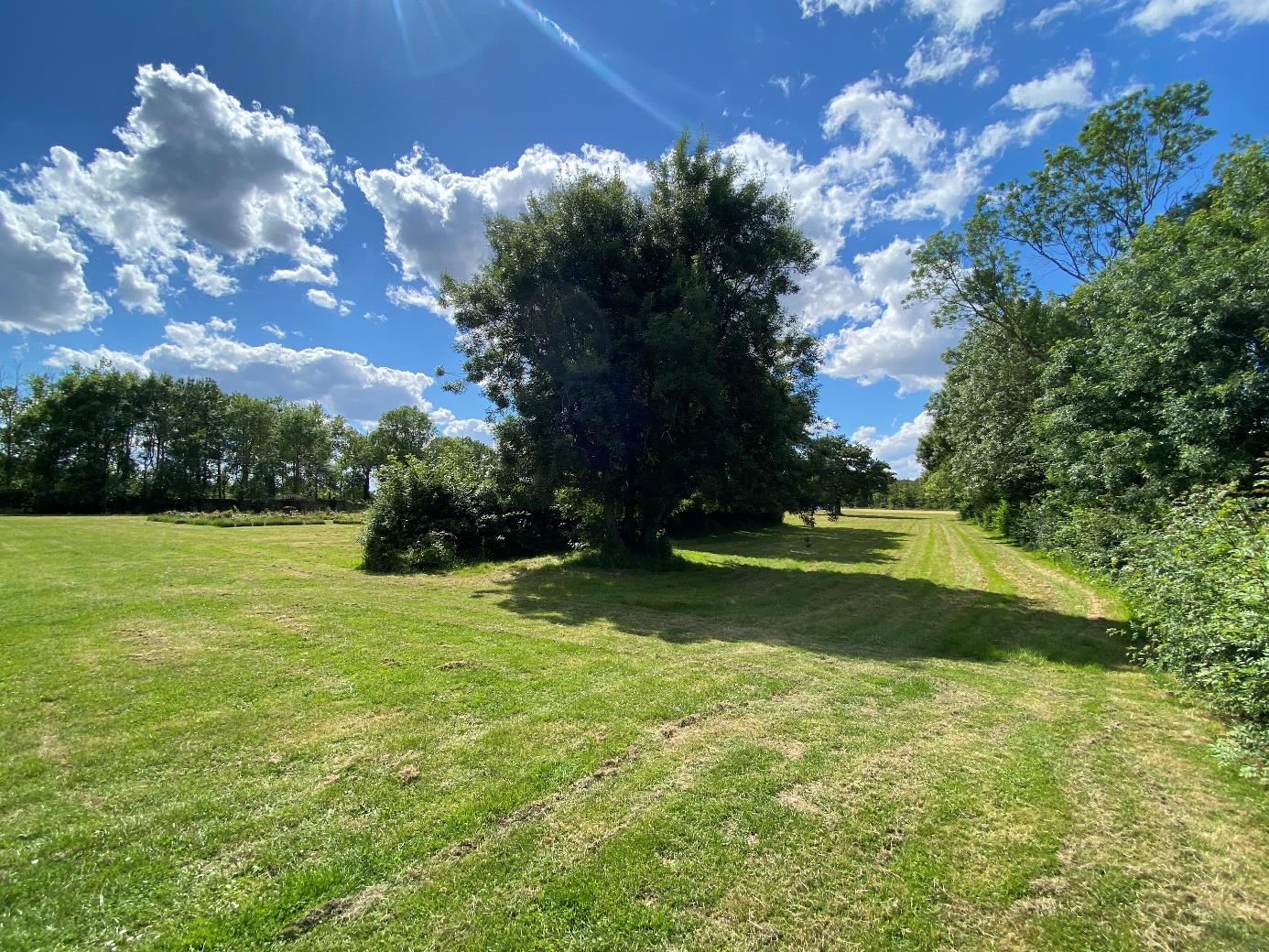
In favour
Why you would buy it
Price per m² is remarkably low
≈€2,200/m² of habitable space (953 m² château + gîte) including 54 hectares, an airfield and 800 m² of outbuildings. Comparable restored moated châteaux in the Loire/Poitou trade at €2,500–€4,000/m² and rarely come with this much land.
majorThe heavy structural work is done
Slate roof redone on the château, new roof, double glazing, heat pump and new septic tank on the gîte. Roofs are the single biggest château money pit — buying one already redone removes the classic €300k–€600k surprise.
majorA licensed airfield is a genuine moat
Three approved runways, a tower and a 300 m² hangar make this the only fly-in château of its kind on the market. It creates a defensible niche (fly-in weekends, hangarage, tail-wheel/EASA-FAA training, aviation club events) and a customer base that is price-insensitive.
majorMultiple independent income units on day one
Château (8 bedrooms), separate gîte (5 bedrooms), independent flat in the wing, pool, chapel. You can live in the flat and let the rest, or split B&B and whole-property rental without any conversion work.
majorYou buy the business, not just the walls
The company operating the gîte is included: websites, booking channels, reviews, customer base and trading history transfer with the estate. That removes the 18–30 months a cold start normally costs and makes year-one revenue forecastable rather than hypothetical — provided the accounts stand up.
majorFully equipped — furniture, tractors, hangar tools all included
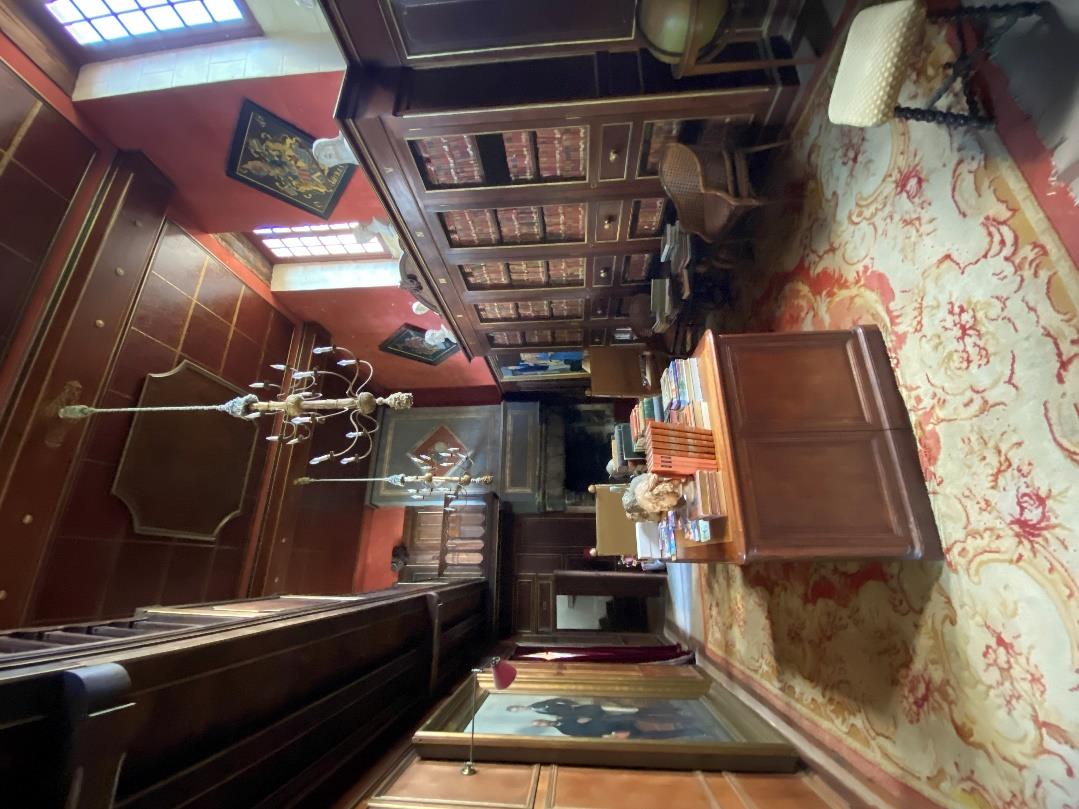
Everything stays: furnishings across 953 m², estate machinery, tractors, hangar and workshop equipment. Kitting out a 13-bedroom operation plus buying grounds machinery is realistically €120k–€200k of capex you do not have to spend. Insist on a valued inventory annexed to the compromis so it is priced into the deal and not quietly removed.
majorNo Monument Historique classification — free hand on the works
Not classé nor inscrit, so no ABF approval, no imposed craftsmen, no permit delays. You can install double glazing, convert outbuildings and change the heating on your own timetable and at market prices. The trade-off is no MH tax deduction and no DRAC grants — every euro of capex is yours.
Puy du Fou at 45 minutes
2.3 million visitors a year, with chronic accommodation shortage in the area. Loire châteaux, Futuroscope (~1h) and the Marais Poitevin add secondary demand.
Capex is optional, not urgent
The chapel and the 500 m² of outbuildings can wait — nothing about the income model depends on them. Year one is limited to the septic upgrade, the gîte kitchen and ERP essentials; the rest is a value reserve you release out of cashflow when you choose.
majorClean, untenanted land
No bail rural on the 53.89 ha and no third-party hunting rights — the land is genuinely private from day one. That protects privacy for weddings and fly-ins, and keeps the option to let the meadows on a precarious basis or to plant, fence and build as you wish. 25 ha of forest under a management plan also opens French forestry tax reliefs.
Two years on the market
Marketed for roughly two years with one price cut already (€2.52M → €2.205M). Sellers at that stage of fatigue accept justified offers they would have rejected in year one. This is your single strongest negotiating fact.
major
Against
Why you might not
Energy: DPE E and oil heating with no double glazing
€12,380–€16,800 a year at 2021 prices for the château alone — realistically €15k–€22k at today's prices for full-time use. Oil is politically exposed in France and secondary glazing on a heritage building is expensive and sometimes restricted.
majorDeep rural micro-market with almost no liquidity
Deux-Sèvres is one of the least sought-after château departments. Exit can take 2–5 years, and the price has already moved from €2.52M to €2.205M — evidence of a thin buyer pool. Treat this as an illiquid operating business, not a store of value.
majorCapex tail is smaller but wholly self-funded
Phasing the chapel and the 500 m² cuts the urgent bill to €150k–€300k (septic, gîte kitchen, ERP essentials, glazing tranche one). But with no Monument Historique status there are no DRAC or Fondation du Patrimoine grants and no deduction of restoration costs against income — the full €400k–€900k long programme comes out of your own cashflow.
majorThe airfield may not transfer
The aerodrome authorisation is tied to the current owner and transferability is still being analysed. Until it is confirmed in writing, treat every euro of fly-in revenue and every euro of airfield value as zero in your price. If it does transfer, that is upside you did not pay for — never a reason to pay more.
majorCommercial use means ERP status
Running a hotel/event venue converts the buildings into an Établissement Recevant du Public: fire safety, accessibility, commission de sécurité visits and possibly sprinklers or escape routes. Budget for this before assuming any event revenue.
majorThis is a job, not an investment
At this scale you need at least one full-time couple plus seasonal staff, or you become the staff. Payroll of €60k–€120k/yr is the difference between a working business and a slow burn.
majorBuying the company means buying its past
Taking over the gîte operating company brings its liabilities with it: tax and URSSAF arrears, employment contracts, supplier disputes, guest deposits and forward bookings already paid. A garantie d'actif et de passif with an escrow retention is non-negotiable, and an accountant's review of three years of accounts must precede any signature.
majorMoats: charm with a maintenance bill
Water management, silting, bank collapse, damp in adjoining walls and mosquito/algae control are recurring costs and rarely quoted by sellers.
Seasonality
Poitou hospitality is concentrated May–September. Off-season fixed costs (heating, insurance, staff) continue while revenue collapses unless you build a corporate seminar or aviation-training line.
Pre-offer intelligence
11 questions that move the price
Most are now answered by the seller. What matters is what each answer does to the offer.
- 1
What were the last three years' revenue, occupancy and EBITDA of the existing guesthouse operation?
Partly answeredThe operating company running the gîte is included in the sale, so its accounts exist and must be disclosed — the figures themselves are still to be produced.
What it means: Because you are buying the company, you are entitled to three years of bilans, liasses fiscales, VAT and URSSAF filings before signing. Ask for them now: they turn the price into a yield, and any gap between the claimed and filed revenue is a direct discount.
- 2
Is the property classé or inscrit Monument Historique, and is it within a protected perimeter?
AnsweredNo — not classé and not inscrit Monument Historique.
What it means: Good and bad. Freedom to renovate, convert and install without ABF approval, faster works, no heritage constraints on windows, roofs or interiors. But no Monument Historique tax deduction of restoration costs against income, and no DRAC/Fondation du Patrimoine grants. Budget 100% of the capex yourself; check separately whether a Fondation du Patrimoine label is obtainable for the chapel façade.
- 3
Is the aerodrome authorisation transferable to a new owner, and under what conditions?
AnsweredNo — and we now have the paper that proves it. The arrêté préfectoral of 23 July 2012 authorises M. Edwin R. Boshoff personally to use the field on land belonging to him, over section B parcels 11-18, 110, 122, 417 and 524, and Article 8 declares it precarious and revocable. It has since been made unlimited in time, but an unlimited personal right is still a personal right: it cannot be sold with the walls or carried across in a share deal. You will apply for your own arrêté over strips the same préfecture has already approved several times.
What it means: Price the airfield at zero until your own arrêté is signed. Put a condition suspensive on it with a 6-month window and an extension mechanism, ask the seller to keep his authorisation alive until yours issues so the field is never dormant, and call DSAC Sud-Ouest quoting the 2012 arrêté before you make the offer.
- 4
What exactly does 'septic tank to be upgraded' cost for a commercial-capacity system?
AnsweredThe SPANC of the Communauté de Communes du Thouarsais inspected on 1 August 2024 and classified the château's installation as non-conforme, with sanitary safety defects, under Article 4 c) of the arrêté of 27 April 2012. It is outside a sensitive zone, so no emergency deadline applies — but under L.271-4 of the Code de la construction the buyer must complete the rehabilitation within one year of the acte authentique, after a compulsory design study by a private bureau d'études. The gîte's system is new and conform.
What it means: This is a dated, official, pre-sale defect: deduct it in full. €12k–€25k to replace at domestic capacity, €40k–€70k sized for commercial occupancy — and size it commercially now if any revenue scenario is on the table, because doing it twice costs far more. Annex the report to the compromis and start the étude de filière during the compromis period so the 12-month clock does not start against you cold.
- 5
What is the quoted cost to restore the chapel and to make the 500 m² of outbuildings weathertight?
AnsweredNo urgency — the 500 m² and the chapel can be left as-is and restored in a later phase.
What it means: Removes the works from year-one cash needs and lets you phase capex against revenue. Still get roofs inspected: 'later' only stays cheap while the buildings stay dry. Treat the untouched 500 m² as upside optionality, not as value you pay for today.
- 6
Are any of the 53.89 ha under a bail rural, and what hunting rights exist over the woodland?
AnsweredNo bail rural and no hunting rights for anyone but the owners. A neighbouring farmer maintains the land at the owners' request and keeps the hay and grass in exchange.
What it means: Good, with one legal wrinkle. Land free of tenants is immediately usable for events, glamping, solar or equestrian, and privacy at weddings and fly-ins is protected. But an ongoing cut-and-keep arrangement can be re-characterised by a tribunal paritaire as a bail rural verbal, which carries a 9-year term and a preemption right. Have the notaire terminate it before completion, or re-paper it in your name as a prêt à usage (commodat) or a convention pluriannuelle de pâturage, and budget €8k–€25k a year of mowing if the farmer walks away.
- 7
Is there any insurance on the airfield, and who carries the liability?
AnsweredNone. The website and the published chart state that pilots use the runways at their own risk and peril, and that use of the aerodrome indemnifies the owner/operator.
What it means: Do not rely on that wording. French courts routinely set aside own-risk disclaimers where the operator's own fault — surface condition, obstacles, organisation, wildlife — contributed to an accident, and a disclaimer binds the pilot, not an injured passenger or a third party on the ground. Get a written RC exploitant d'aérodrome quote before exchange (€2k–€6k a year is normal for a private grass field), confirm your buildings insurer accepts aviation activity, and require every visiting pilot to show valid third-party cover as a condition of prior permission.
- 8
How will the sale be brokered, and who pays the commission?
AnsweredThe seller intends to appoint an estate agent at 3%, at the buyer's expense, and asks you not to contact any agent before they do — approaching one first could push the percentage up.
What it means: Respect the instruction: it costs you nothing and going around them risks re-opening the fee. On the arithmetic, 3% on the same net vendor price of €2,100,000 gives an all-in €2,163,000 rather than €2,205,000 — €42,000 off the headline before a single word of negotiation. From here on, negotiate in net-to-vendor terms so the commission stays the seller's arithmetic, and make the mandate exclusive to this transaction so you are not paying a fee for a buyer the agent never found.
- 9
Are furniture, the hangar equipment and the goodwill (website, bookings) included?
AnsweredYes, in full. All furniture, hangars, tools, tractors and equipment stay with the property, and the company created to operate the gîte is included in the sale — websites, brand, customer base and forward bookings come with it.
What it means: This is a genuine turnkey business, not a bare château: roughly €80k–€150k of movables plus an operating entity with trading history, reviews, ranking and a mailing list you would otherwise spend two or three seasons rebuilding. It also changes the deal's shape — buying shares means you inherit the company's liabilities as well as its assets, so it needs an audit and warranties, not just a survey. See the share-deal checks below.
- 10
What comes with the operating company, and what liabilities come with it?
Partly answeredThe gîte company transfers to the buyer with its websites and customer base; its accounts, contracts and liabilities still need to be examined.
What it means: Non-negotiable before signing: three years of accounts, tax and social filings, the URSSAF and tax clearance certificates, staff contracts (they transfer automatically), supplier and OTA contracts, outstanding bookings and deposits already taken, any loans or leases on equipment, and the domain names and Google/Booking/Airbnb accounts in writing. Structure it as a share purchase agreement with a garantie d'actif et de passif (typically 18–36 months, backed by a bank guarantee or escrow) so historic liabilities stay with the seller. Note the tax angle too: share transfers carry ~5% droits d'enregistrement on a property-heavy company rather than ~5.8% mutation duty, but you also inherit the company's low book value, which raises your future capital-gains exposure — have a French notaire and accountant model both routes before you commit.
- 11
How long has it been on the market and what offers have been refused?
AnsweredOn the market for two years.
What it means: This is your strongest negotiating fact. Two years of no sale at successive asking prices is the market saying the price is wrong, not that the buyers are. It supports opening well below €2.205M and holding — carrying costs of roughly €50k–€70k a year are running against the seller, not you.